
One design system, two learning experiences.
An offline-first STEM platform built for primary and secondary students, calibrated differently for each.
What we set out to solve.
Inspire STEM Hub wanted to reach Tanzanian students in classrooms where bandwidth is unreliable and a single device often serves several learners. A primary-school child and a secondary-school student aren't the same audience — content depth, navigation, and tone all need to flex.
The brief was to ship two distinct learning experiences that nonetheless feel like one product, share one back-end, and are maintained by one team.
What we shipped.
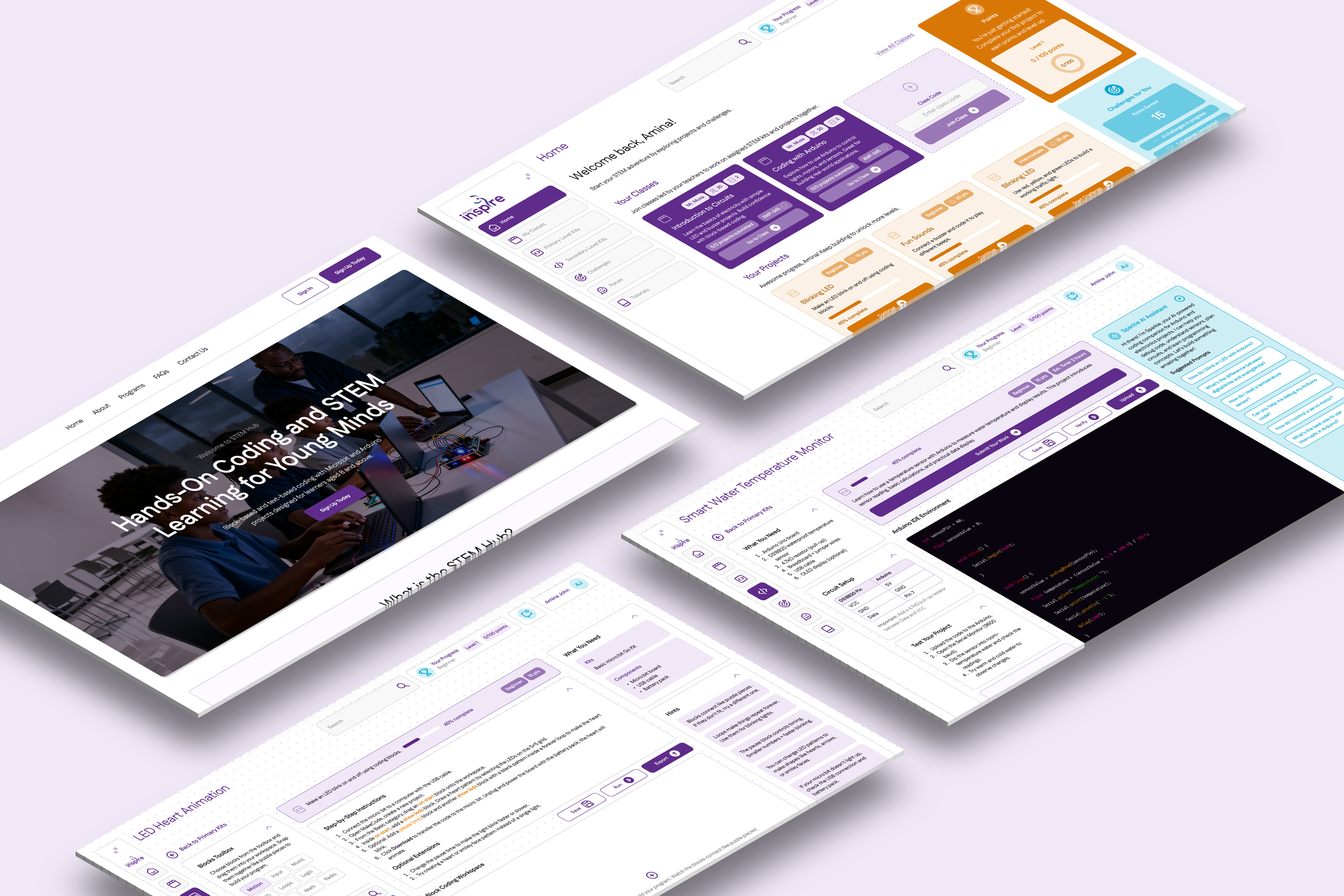
Lockwood designed and built Inspire STEM Hub as a desktop-first, offline-capable platform with a single content backbone and two front-of-house experiences — one calibrated for primary, one for secondary. A shared design system keeps both products consistent; per-audience tokens flex tone, complexity, and progression mechanics.
Lessons sync when a device gets online, then stay available offline through the next school week. Teachers see a roll-up of progress across every learner on every device.